

“Happiness is waking up, looking at the clock and finding that you still have two hours left to sleep.”
Charles M. Schulz, American Cartoonist
What do we all want to do after a good day’s work?
Yes. We want to have a good night’s sleep!
Sleep is an important part of our daily routine. We spend one-third of our life sleeping. Sleep, is as essential as food and water in our life.
But, have you ever wondered why we sleep? Why is it such an important requirement?
Let’s dive into it right away!
Humans are a diurnal species, which means we are programmed to be active during the day and sleep during the night. Chronotype is a term that refers to the genetic and behavioural components affecting what time you go to sleep. Chronotypes can be divided into two types: Early birds and Night owls. Early birds prefer morning hours for intellectual and physical activity and night owls sleep late and are more active in the evening. But studies have proved that early birds are more intelligent and productive compared to night owls.
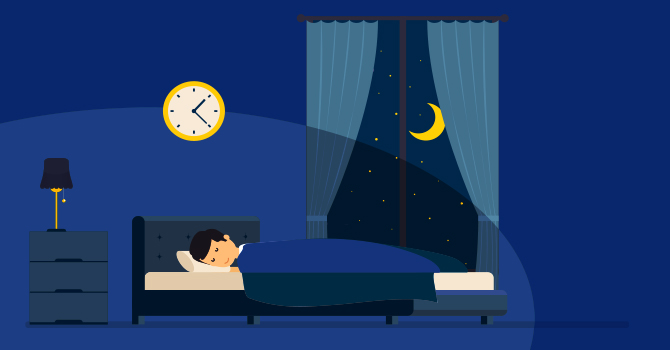
THE 4 STAGES OF SLEEP
Now, there are 2 basic types of sleep: Non-REM (Non-Rapid Eye Movement) sleep and REM (Rapid Eye Movement) sleep.
The first three stages are a part of Non- REM sleep. The fourth stage is a part of REM sleep.
Stage 1: During this short period of time, (around 1- 5 minutes) you have just dozed off, your heartbeat, breathing, and eye movements slow, and your muscles relax with occasional twitches. You will observe that your brain starts to slow down from their daytime wakefulness patterns.
Stage 2: This is a period of light sleep. Your heartbeat and breathing slow, and muscles relax even further. Your body temperature drops and eye movements stop. Brain wave activity slows.
Waking someone up is easier in the first two stages of the sleep cycle.
Stage 3: The deepest part of Non-REM sleep can be seen in Stage 3. It is characterised of the phase of deep sleep that requires one to be refreshed from. It is the period of sleep that you need to feel refreshed in the morning. It occurs in longer periods during the first half of the night. The breathing and heartbeat go to their lowest levels during sleep. Your muscles are relaxed and it may be difficult to awaken you. Brain waves become even slower. It is assumed that deep sleep plays a vital role in recuperation of the body as well as effective memory and thinking.
Stage 4: The sole stage of REM sleep can be seen in Stage 4. It first appears around 90 minutes after one falls asleep. Your eyes move rapidly from side to side behind closed eyelids. Mixed frequency brain wave activity becomes closer to that seen in wakefulness. Breathing becomes irregular and faster, and the blood pressure and heart rate reach to near waking levels. Most of your dreaming occurs during REM sleep, although some can also occur in non-REM sleep. Your arm and leg muscles become temporarily paralyzed, which prevents you from acting out your dreams. Sleeping in the REM time lessens as you age. Memory consolidation most likely requires both non-REM and REM sleep.
As the night passes, it is usual to spend more percentage of time in REM sleep, with most of the dreams occurring during the later half of the night.

Sleep Mechanisms
Sleep is regulated by two primary factors in the body: sleep-wake homeostasis and the circadian alerting system.
- Sleep-wake homeostasis: This precise word reflects something that most of us know intuitively: the longer you are awake, the more you feel the desire to sleep. This is due to the homeostatic sleep drive, the body’s self-regulating system that builds up pressure to sleep dependent on how long you’ve been awake. After a time of insufficient sleep, this same impulse causes you to sleep longer or more deeply.
- The circadian alerting system: Circadian rhythms, which are part of your body’s internal clock, last approximately 24 hours and play an important role in a variety of biological activities, including sleep. The most significant influence on circadian rhythms is light exposure, which encourages wakefulness during the day and sleepiness at night.
Dreaming
Everyone has a dream. You spend roughly 2 hours each night dreaming, although you may not remember the most of them. Its precise purpose is unknown; however dreaming may assist you in processing your emotions. Events from the day frequently intrude your thoughts while you sleep, and people who are stressed or anxious are more prone to experience frightening dreams. Dreams can occur at any stage of sleep, although they are most vivid during REM sleep. Some people remember their dreams in colour, while others only remember their dreams in black and white.

Chemicals and hormones related to sleep
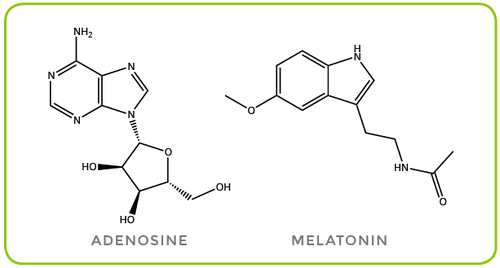
When we are awake; a substance called adenosine accumulates and appears to enhance sleep pressure. Caffeine, on the other hand, lowers adenosine, which could explain why it promotes wakefulness in part.
Melatonin, a hormone that promotes sleep and is naturally created as light exposure diminishes, is one of the most well-known sleep hormones.
How much sleep do we need?
Babies can sleep up to 16 to 18 hours per day at start, which can help with growth and development (especially of the brain). School-age children and teenagers require approximately 9.5 hours of sleep per night. Most adults require 7-9 hours of sleep every night, however after the age of 60, nocturnal sleep becomes shorter, lighter, and more frequently disrupted by many awakenings. Elderly persons are also more likely to take sleep-interfering drugs.
Fun facts about sleep:
• Most old people are likely to dream in black and white.
• The longest time for which someone has gone without sleep is 11 days, 25 minutes.
• Elephants sleep less than any other animal.
• Humans are the only mammals who fall asleep late on their own will.
• Sleeping on your front can help in efficient digestion.
Piya Singh
©BioSaga 2021
Featured Image Courtesy: GOOGLE
 BioSaga