

A hypnic jerk is an involuntary twitch of one or more muscles. It occurs when a person is falling asleep. It tends to happen just as the person is transitioning from a wakeful state to a sleeping state.

This type of involuntary muscle movement called myoclonus. Hiccups are another common form of myoclonus.
Hypnic jerks are also known as hypnagogic jerk, sleep start, sleep twitch, myoclonic jerk, night start.
Hypnic jerks are associated with a rapid heartbeat, quickened breathing, sweat, and sometimes a peculiar sensory feeling of ‘shock’ or ‘falling into the void’. It can also be accompanied by a vivid dream experience or hallucination.
Some people might not be aware of these jerks while sleeping but may know of them only if another person notices the movements. On other cases, these jerks might be strong enough to wake or startle the person experiencing hypnic jerks.
Hypnic jerks occur randomly and affect both men and women of all ages. 60 to 70 percent of people experience hypnic jerks, usually just as they are about to fall asleep.
Sometimes, hypnic jerks are mistaken for another form of movement during sleep. For example, hypnic jerks can be confused with restless leg syndrome, periodic limb movement disorder, hypnagogic foot tremor, rhythmic movement disorder, and hereditary or essential startle syndrome, including the hyperekplexia syndrome.
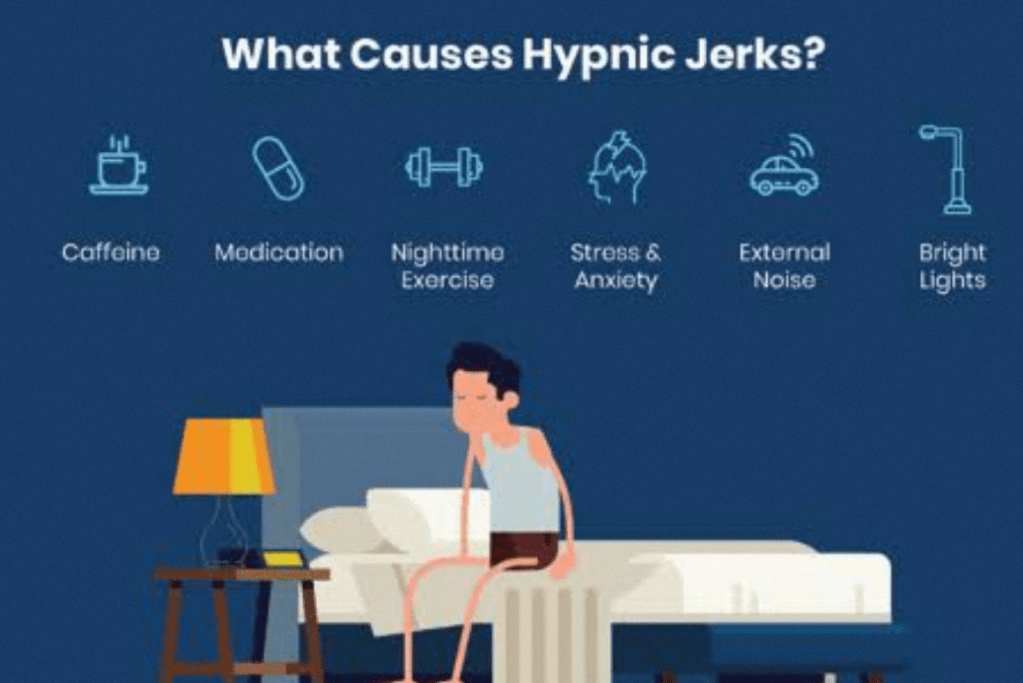
Why do hypnic jerks occur?
Exercising late in the evening: Exercising stimulates the body, so exercising late in the evening may make it more difficult for the body to relax in time for sleep. This excess stimulation may cause a hypnic jerk.
Consuming excess stimulants: Body and brain stimulants, such as caffeine, nicotine, or some drugs, may make falling asleep or staying asleep throughout the night difficult. They can also increase the frequency of hypnic jerks.
Stress and anxiety: A stressful lifestyle or feeling anxious quite often can make it difficult for the brain to relax in preparation for sleep. An alert brain is easier to startle, so a person is more likely to wake up when these involuntary muscle twitches occur.
Poor sleeping habits: Irregular sleep patterns, being sleep deprived or regular sleep disturbances may also lead to hypnic jerks

Sumedha Bose
©BioSaga 2021
Featured Image Courtesy: Google
 BioSaga